Thursday, March 9, 2017

CD Spotlight February 2017: Vanhal: 6 Flutes & Piano Sonatas – World Premiere


6 Flute & Piano Sonatas
World Premiere with 6 sonatas
for flute & piano by J.B.Vanhal. Vanhal was a friend of Mozart
& Mozart used his Symphonies,
Concertos & Chamber Music
as Style reference.
Bent Larsen
Sverre Larsen
Classico

Thursday, February 2, 2017

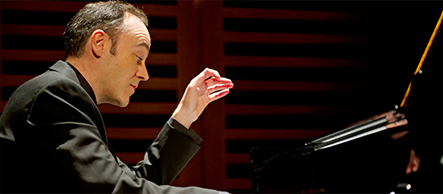
Interview January 2017: 10 Questions with L. McCawley

 
Leon McCawley: Official Links
Leon McCawley Official Site: Leon McCawley
Leon McCawley: Leon McCawley at RCM
Leon McCawley: Leon McCawley Twitter (Official)
Leon McCawley: Leon McCawley Facebook (Official)
Leon McCawley: CD Haydn Sonatas & Variations
Leon McCawley: CD Mozart: The Piano Sonatas
Leon McCawley: Next Concert: Beethoven Concerto No. 3 (Gijon: 19 January 2017)
Leon McCawley: Next Concert: Beethoven Concerto No. 3 (Oviedo: 20 January 2017)
Leon McCawley: Next Concert: Mozart Concerto K. 491 (London – RPO: 23 March 2017)
Leon McCawley: Next Concert: Mozart & Schubert & Liszt (Grieg Museum: 26 March 2017)

1. Which considerations led you to publish a CD Album of piano music by J. Haydn and which criteria you followed in choosing the piano works by Haydn to be featured in your CD Album? What do you find particularly attractive and pleasing in the style and music by J. Haydn?


Haydn is a composer that I have always felt connected to.

I have been drawn to his piano music since childhood and performed his Sonatas and Variations in recital many times over the years. Since I had already recorded piano music of Mozart and Beethoven, I felt that it was the right time to add some of Haydn’s repertory to my discography.

On my recently released CD on SOMM recordings, I feature four Sonatas that demonstrate the myriad of possibilities for the 18th century keyboard and also include his most profound and deeply felt keyboard composition (in my opinion), the F minor Variations.

What pleases me most though about Haydn is his wit, humour and sunny optimism.

There is so much fun in his work and he explores extremities of the keyboard with great variety of dynamics and unexpected harmonic shifts.


2. You have recorded piano works by Mozart, by Beethoven and by Haydn, works which have also long been part of your recital repertoire. In your opinion and according to your experience, what are the real elements of continuity and of innovation in the music and in the pianism developed and used by Haydn, Mozart and Beethoven?

It is always interesting to make comparisons with these great composers and whether this is a distinctly natural progression.

Haydn was a great innovator for his time and without doubt paved the way for Beethoven, his pupil. The extremes of register, dynamic, tempo and unconventional treatment of sonata form were of a huge influence to Beethoven and you can see this with striking vividness in Beethoven’s Sonatas in comparison to Haydn.

Mozart perfected the sonata form that Haydn had mapped out so effectively so that every work published is a compositional gem; I would not want to alter a note of Mozart’s and his wonderful gift for melody inspired the great keyboard melodists of Schubert and later Chopin and Schumann in the Romantic period.

I feel his piano music strikes a perfect middle ground between the two composers. In his dramatic C minor Sonata K457 you can hear a youthful Beethoven (think of the Pathétique Op. 13) and his early Sonata K282 was surely an influence on Haydn’s charming late Sonata No. 59 Hob. XVI/49.
__________________________________________________
BEETHOVEN CDs (Leon McCawley)
__________________________________________________


Beethoven: Works for piano, 32 Variations, Patéthique & Les Adieux


Beethoven: Choral Fantasia


3. In 1993 you won the highly prestigious 1st Prize in the International Beethoven Piano Competition in Vienna. What are your memories and impressions linked to that experience and what did it mean to you and your career, to win such a prize in the very city of Haydn, Mozart and Beethoven?

I have enormously happy memories of my time in Vienna. At nineteen, to win a competition as prestigious as this meant so much to me.

I had not expected to win as I was one of the youngest competitors but was very grateful for such a wonderful experience, performing Beethoven 1st Piano Concerto in the Concerto Final in the beautiful surroundings of the Musikverein.

The competition prize included a Bösendorfer Grand Piano which I still cherish today in my practice studio some 23 years later.

Preparing for the competition really propelled my interest in Beethoven further and the added icing on the cake of taking 1st Prize was a boost to my career as a concert pianist.


4. You have produced a marvellous CD recording of the complete edition of Mozart’s piano sonatas 2005/2006 and in 2011 you have also performed the complete Mozart’s sonatas over one weekend at King’s Place (London) with great audience and critical acclaim. What led you to produce such magnificent Mozartian events in such a challenging context for a pianist and what are your pieces of advice and tips to those pianists who want to approach the repertoire of Haydn and Mozart and want to build a personal repertoire on their works?

The main reason for recording the Complete Mozart Piano Sonatas in 2005/6 was the desire to offer my own personal dedication and celebration of Mozart’s Bi-centenary of his birth.

It was also a timely dedication and admiration for my mentor of over ten years, the Russian pianist and fine Mozartian, Nina Milkina, who passed away in 2006 and had been a great source of inspiration to me, in particular for Mozart; incidentally she shares the same birthday as Mozart, January 27th.

Performing the complete Mozart sonatas five years later in London was tremendous undertaking; I enjoyed the challenge very much but I think will spread the performances over a season or two next time, that is if the opportunity arises again!

My tips to young pianists would be not to be afraid of projecting when performing Haydn and Mozart and try to have more of an operatic approach when dealing with cantabile and melodic line.

Also don’t treat this music with too much fragility; a full-bodied sound that is fully spirited and fully expressive will help to illuminate any interpretation of a classical sonata.

Learn all the repertoire, or as much as you can!


5. Your favourite work by Mozart and your favourite work by J. Haydn.

It’s difficult to choose only one of each but here goes: Mozart’s Piano Concerto K466 and Haydn’s F Minor Variations.


6. Vanhal, Hummel, F.X.Duschek, J.L.Duschek, L.Kozeluch, J.G.Albrechtsberger… Do you have in mind the name of some neglected composer of piano music of the 18th century you’d like to see re-evaluated?

Not yet! I don’t find as much inspiration here as the three greats that we have been discussing.

There is so much to explore here that I feel I don’t need to delve any further just yet as I am endlessly fascinated by Haydn, Mozart and Beethoven.

That said, I do like Hummel’s Piano Concertos and will be performing Hummel’s cadenzas when I play Mozart Piano Concerto K491 with Royal Philharmonic in London on March 23rd at Cadogan Hall.


7. Name a neglected piece of piano music of the 18th century you’d like to see performed in concert with more frequency.

I adore Mozart’s Duport Variations and you don’t often hear them in concert.


8. Have you read a particular book on Mozart Era you consider important for the comprehension of the music of this period?

The Letters of Mozart are fascinating… but for full comprehension the best place to visit is the music where the worlds of these marvellous composers open up in your hands.


9. Name a movie or a documentary that can improve the comprehension of the music of this period.

Miloš Forman’s Amadeus in 1984 was a wonderful film adaptation of Peter Shaffer’s play and the use of Mozart’s Requiem in the movie was particularly striking.

But again, I turn to the music and the scores for comprehension first and foremost.


10. Do you think there’s a special place to be visited that proved crucial to the evolution of the 18th century piano music?

Undoubtedly Vienna!

… as this was the centre of keyboard development in the 18th century.
And it also was a significant place for my pianistic development too!
__________________________________________________
THE NEW BÖSENDORFER-SAAL IM MOZARTHAUS VIENNA
__________________________________________________
  • Bösendorfer-Saal in Mozarthaus
Since October 2010 the new Bösendorfer-Saal im Mozarthaus Vienna is running. It is the third one in the history of Bösendorfer and it is situated in the Mozarthaus Vienna. It’s a beautifully designed hall in the vaulted cellar of the very building of Mozart’s flat in Vienna, near St. Stephan’s Cathedral.


Thank you very much for having taken the time to answer our questions!
Thank you!

Copyright © 2016 MozartCircle. All rights reserved.MozartCircle exclusive property. 
Iconography is in public domain or in fair use.

CD Spotlight January 2017: Vanhal: 3 Cello Concertos – World Premiere


3 Cello Concertos

World Premiere with 3 cello
concertos by J.B.Vanhal. Vanhal was a friend of Mozart
& Mozart used his Symphonies
& Concertos as Style reference.
Péter Szabó
Sinfonietta Pannonica
Hungaroton

Sunday, January 15, 2017

Impossible Interviews December 2016: Mozart’s Friend A. Stadler


Who is Anton Stadler?
Called by Mozart Nàtschibinìtschibi (nickname probably meaning poor miserable young man of follies), Anton Stadler was one of the best close friends of Mozart: among them also Gottfried von Jacquin (called HinkitiHonky) and his sister Franziska (Sigra. Dinimininimi).

Friendship in 1781
Anton Stadler and his brother Johann Nepomuk Franz, with the Bohemian players Anton David and Vincent Springer, were considered the best clarinet players in Vienna in 1780s and 1790s. Mozart befriended them in 1781/1782 and in the following years wrote an important series of works (more than 15) for clarinets, basset horns and basset clarinets.

Freemasonry and The Grotto secret society
27 September 1785 Anton Stadler became a freemason and this situation helped to create a special relationship and a closer friendship with Mozart. Sources are not always very clear on this subject, but it seems that Anton Stadler became a sort of vice- (possibly a Papageno working for Tamino?) of Mozart on various matters, especially on money, pawnshops and secret societies. In fact, Mozart and A. Stadler decided to create a new reformed Freemason Lodge or a completely new Secret Society, called The Grotto, and A. Stadler was writing down the rules of this new Secret Society. Constanze Mozart had still the manual of this new Society The Grotto at the end of 18th century. After her letters on this subject, the Mozart-Stadler’s manual of the new Secret Society disappeared and is today considered lost.

Pawnshops, loss of money and debts
The activity of A.Stadler with pawnshops, carried on also on behalf of Mozart, led to the loss of a considerable amount of money: important precious watches, money (at least ca. $1500 or more in modern values), almost all the silverware and other valuable goods which belonged to Mozart. Due to such facts, Constanze Mozart and the other relatives of Mozart always considered A.Stadler just a vulgar irresponsible jester and the story of the new Secret Society The Grotto probably was used by Constanze Mozart against A.Stadler, who didn’t want to be involved any more in stories of Secret Societies after the French Revolution. Moreover, A.Stadler in 1791 received from Mozart the sum of ca. $3000 (modern value) for his Tour of Concerts across Europe and, as far as we know, not only never paid that sum back to Mozart’s family, but never paid for the famous Concert K.622 and for the new instruments built for him by Theodor Lotz.

Inventor of new instruments?
A.Stadler attributed to himself the very invention of various instruments: the basset clarinet and probably a better extended design of the basset horn. We know that, technically speaking, instead, at least the basset clarinet was, in reality, designed and built by Theodor Lotz. So A.Stadler’s inventions are, at this moment, matter of controversy.

His activity as theorist
After the death of Mozart, A.Stadler kept playing clarinet, basset clarinet and basset horn at high levels, working for the Imperial Court and receiving new music by good composers like Kozeluch, Eybler and Süssmayr, all somehow linked to Mozart as friends or adversaries. Then A.Stadler distinguished himself most as theorist, thanks principally to his highly regarded Musick Plan (1800). Nonetheless, his incapability in dealing with money continuously led him into losses of money and debts and he poorly died in 1812.

__________________________________________________
WORKS BY ANTON STADLER
__________________________________________________

A) Theory works:
• Klarinett-Schule
• Musick Plan (1800; for Count Festetics on how to organize a School of Music)
B) Compositions by Stadler:
• Partitas for 6 wind instruments (1785)
• 18 Terzetten for 3 basset horns
• 3 caprices for clarinet (1808)
• 3 fantaisies ou potpourris for clarinet (1809)
• Variations sur différents themes favorites for clarinet (1810)
• 6 Duettinos progressives for 2 Clarinets (1808)
• 6 Duettinos concertantes for 2 Clarinets
• 12 ländlerische Tänze for 2 Clarinets (lost)
• 10 Variations über Müsst ma nix in übel aufnehma for Clarinet (lost)
• 2 Märsche for Wind Ensemble (lost)
• 12 deutsche Tänze mit Trios for Wind Ensemble (lost)
• 6 Duettinos for 2 Csákans or Csákan & Violon (1808)
• 7 Variations for Csákan (1812)
• 9 Variations über Müsst ma nix in übel aufnehma for Csákan (lost)
• 3 Caprices for Csákan or Double flute (lost)

Copyright © 2016 MozartCircle. All rights reserved.MozartCircle exclusive property. 
Iconography is in public domain or in fair use.

CD Spotlight December 2016: Symphonies Concertantes: Kozeluch & Mozart Contemporaries


Symphonies Concertantes

Music by Kozeluch, Pleyel, Danzi,
Hoffmeister, Winter, Abel, Ritter,
Crusell, Schneider. Contemporaries of Mozart and a
few of them also friends of Mozart
and Haydn.
Consortium Classicum
Academy of St. Martin-in-the-Fields
cpo records

Impossible Interviews November 2016: Mozart’s Friend Abbé M. Stadler


Who is Abbé Stadler?
Most of Mozart’s music admirers and estimators totally ignore who Abbé Stadler was. However, at the same time, they owe him a lot.
Close friend of Wolfgang Mozart and of his wife Constanze, direct witness of compositional sessions by Mozart, he played a fundamental role in the preparation, organization and publication of the many manuscripts and musical scores left by Mozart at his death (see, for example, the story of the mysterious completed opera by Mozart Semiramis, Zaide?, August 1799).
He was also the custodian of various first hand anecdotes on Mozart and his style of working, anecdotes, which are still fundamental, today, to determine and correctly comprehend the genesis of a few masterpieces written by Mozart and, among them, the Requiem itself.
Thanks to a cousin of Abbé Stadler, Barbara Ployer (their family relation has been recently confirmed by the accurate genealogical studies carried on by M. Lorenz), today we have an original music theory exercise book by Mozart himself (1784, now also in NMA X/30/2). Again thanks to the intense philological activity of Stadler, we have today also the exercise book Freystädtler-Studien (NMA X/30/2), which Stadler called Mozart’s teaching in composition 1784, which is a marvellous example of how long and accurately Mozart studied the works by Handel and Bach. Stadler also completed lists of all known music fragments from Mozart, lists which then proved fundamental for both Nissen and Köchel.
Moreover, his work on Mozart’s manuscripts was so appreciated by Constanze Mozart, that he received the permission to complete a few pieces by Mozart, which had been left unfinished by the composer himself.
Among the various works by Mozart completed by Abbé Stadler, there are the piano solo Fantasia K. 396, Allegro K. 400 and Minuetto K. 355 and the Kyries K. 322 and K. 323.
Close friend also of Beethoven, during the first years of the 19th century he carried on an important philological work, to determine which parts of the Requiem by Mozart were actually by Mozart himself and which ones were by others (see also Stadler, Vertheidigung der Echtheit des Mozart’schen Requiem). According to certain sources, he worked on the Requiem also with the help of Constanze and marked, in common pencil, the parts by Mozart with an M and those by Süssmayr with an S. Stadler was also considered by a few scholars as the author of a former completion of a few parts of the Requiem, then discarded by Süssmayr in the final version.  It is sure, instead, that: Stadler corrected the first original version in possession of Constanze Mozart («I said that my copy was more correct than the original…» […] «…mine is not only more correct than any other, on account of its containing the improvements of the Abbé’s masterly hand, but may be said to exceed in correctness the original itself.» Constanze Mozart, 26 November 1800); Stadler also added to the original version the figured bass accompaniment in red pencil and then in red ink, in order to preserve it; Stadler (and Constanze) affirmed that, in creating the completion, Süssmayr used also fragments of an already outlined version and other unfinished works by Mozart (but the latter is partially a conjecture by André, based upon his theory that actually 2 Requiems, one an older unfinished work written in 1789, existed and that Mozart, before his death, asked or thought to fill up the lacunae of the actual Requiem with sketches already written by him beforehand, ca. in 1789, for another unfinished Requiem and so did Süssmayr). Stadler in 1799 and 1800 actively helped Constanze to prepare the famous first printed edition of the Requiem and to solve the many Requiem difficult legal issues with the, until then, mysterious Count von Walsegg and his lawyer Sortschan of Vienna.
Stadler was also one of the composers selected for the monumental Diabelli Variations Project by 51 Composers (1819), for which he wrote Variation 41 on a Waltz by Diabelli.
We know also that Constanze Mozart wanted Stadler to complete the Rondo for piano & orch. «Concerto No. 26» (sic! in Constanze’s letter, due to the original numbering on the autograph manuscripts: which is in reality the frag. K. 386), because she knew Abbé Stadler could re-construct the original instructions by Mozart himself thanks to his family correspondence with the pianist Barbara Ployer. K. 386 then was completed by E. Smith and A. Brendel at the end of 1980s.
__________________________________________________
WORKS & ORIGINAL SOURCES ON ABBÉ STADLER
__________________________________________________

A) Mozart’s works completed by Abbé Stadler:
• Kyrie K. 322
• Kyrie K. 323
• Piano solo Minuetto K. 355/576b
• Piano solo Fantasia K. 396 (originally for piano & violin)
• Piano solo Allegro K. 400
• Piano & violin Rondo K. 372
• Piano Fugue K. 401
• Piano & violin Sonata K. 402
• Piano & violin Sonata K. 403
• Mov. Allegro for an Oboe concerto K. 416f
• Cantata Dir, Seele des Weltalls K. 429
• 3 movs. for Trio K. 442
• Piano Fugue K. 443
• No. 3 (a version revised by Stadler, Mozart original manuscript missing) of La Clemenza di Tito
• a first completion of some parts of Requiem, then discarded by Süssmayr (?)
• the Requiem figured bass accompaniment in red pencil and then in red ink
• arrangements of Mozart’s works
B) 19th century original sources on Stadler’s philological work on Mozart’s Requiem, on his friendship with Mozart and Constanze Mozart and on the theory of the 2 Requiems by André:
• The Harmonicon I (1828), p. 101 (.pdf = p. 114)
The Musical World IX (1838), p. 462 (.pdf = p. 291)
C) Works by Stadler on Mozart’s Requiem and the History of Music:
• Vertheidigung der Echtheit des Mozartischen Requiem (1826)
Nachtrag zur Vertheidigung (1827)
Zweyter und letzter Nachtrag… sammt Nachbericht über die Ausgaben dieses Requiems durch André in Offenbach, nebst Ehrenrettung Mozart’s und vier fremden Briefen (1827)
Materialen zur Geschichte der Musik unter den österreichischen Regenten (ms.)
D) Compositions by Stadler:
Tabelle, aus welcher man Menuetten und Trios nerauswurfeln kann (1781)
• Oratorio: Befreyung von Jerusalem (1816)
• Cantatas:
Seladon
Komposition auf den Tod der Gemahlin weiland Kaiser Joseph
Das Gewitter
Frühlingsfeyer
• 2 cori & 5 scenes for Polyxena
• Sacred Music:
• 2 Missae solemnes
• 8 Masses
• 2 Requiem
Te Deum
• 3 Magnificat
• 2 Miserere
• Gradual
• 4 Offertories
• 42 Psalms
• 10 Salve Regina
Ave Regina
Regina Coeli
• 3 Litanies
• 4 Corpus Domini Antiphonies
• 10 Responsories for the Holy Week
• other Sacred Music works
• For Orchestra:
• 12 Minuets
• 12 English Dances
• Chamber Music:
• Quartets
• Trios
• Sonatas for piano & horn
• Fugues for piano & organ
• For Piano & Keyboard:
• Sonatas
• Sonatinas
• Fugues
• Variations
• Var. 41 on a Waltz by Diabelli
• Vocal Music:
• Arias & choruses for a Singspiel
• Arias for a Pastoral comedy
• Hymns & Cori:
Glaube, Hoffnung und Liebe
Es ist ein Gott
Gott
Hoch du, mein Österreich
Klage auf den Tod der Kaiserin Maria Theresia
• 42 Lieder
• Arrangements of works by Haydn, Gluck, Mozart, Cherubini, Dalayrac, Beethoven and others

Copyright © 2016 MozartCircle. All rights reserved.MozartCircle exclusive property. 
Iconography is in public domain or in fair use.

CD Spotlight November 2016: 230th Mozart’s Le Nozze di Figaro (1786-2016)


230th Le Nozze di Figaro
(1786-2016)
Pisaroni Karg Yoncheva Hampson
Brower Von Otter Muraro Villazón
Chamber Orchestra of Europe
Yannick Nézet-Séguin
(Release July 2016)
www.deutschegrammophon.com