

Leon Bosch: Official Sites
Leon Bosch Site: Leon Bosch Official Site
Leon Bosch Site: Leon Bosch – I Musicanti (Official Site)
Leon Bosch: Leon Bosch (Twitter)
Leon Bosch: Leon Bosch (LinkedIn)
Leon Bosch: Leon Bosch (Facebook)
Leon Bosch: I Musicanti Publishing
Leon Bosch: Leon Bosch (Meridian Records)
Leon Bosch Site: Leon Bosch Official Site
Leon Bosch Site: Leon Bosch – I Musicanti (Official Site)
Leon Bosch: Leon Bosch (Twitter)
Leon Bosch: Leon Bosch (LinkedIn)
Leon Bosch: Leon Bosch (Facebook)
Leon Bosch: I Musicanti Publishing
Leon Bosch: Leon Bosch (Meridian Records)
Leon Bosch: CD Albums
Leon Bosch: Dittersdorf: Virtuoso Works for Double Bass
Leon Bosch: Bottesini: Virtuoso Double Bass Vol. 2
Leon Bosch: Bottesini: Virtuoso Double Bass Vol. 1
Leon Bosch: Dittersdorf: Virtuoso Works for Double Bass
Leon Bosch: Bottesini: Virtuoso Double Bass Vol. 2
Leon Bosch: Bottesini: Virtuoso Double Bass Vol. 1
1. You have released a marvellous CD Album with the Complete Works for Solo Double Bass by Dittersdorf, teacher of Vanhal and among the friends of Haydn and Mozart. Can you tell us about these special rather demanding and magnificent works left by Dittersdorf, the story behind them and their fortune among the contrabassists, also today? What led you to produce this special CD Album with the music by Dittersdorf for the Solo Double Bass? What attracts you most about Dittersdorf’s music, with that for double bass especially written between 1766 and 1767?
The Classical era was a golden period for the double bass, and it is believed that around 250 concertos were written for the instrument during that musical epoch.
Without Johannes Matthias Sperger (1750 – 1812) however, Dittersdorf’s concertos for double bass, the concerto by Vanhal, and many other solo works for the instrument would now be lost forever. Sperger was not only double bassist in Haydn’s orchestra at Esterházy, but a virtuoso solo performer in his own right, and a prolific composer too; he is credited with at least eighteen solo concertos, a handful of sonatas, many beautiful pieces of chamber music with double bass, as well as orchestral music, much of which is only just coming to public attention.
Dittersdorf’s autographs of his works for double bass have not survived, but it was Sperger’s set of parts, in the hand of a careless Viennese copyist, that provided the sole basis for the survival of both concertos, the sinfonia concertante for viola, double bass and orchestra, as well as the duetto for viola and double bass.
They were composed for the brave Pischelberger whom Dittersdorf himself met in Vienna in 1760s and then employed as one of the soloists in his orchestra at Court in Grosswardein (now Oradea, Romania), and Rodney Slatford’s Yorke Edition first published these in 1978, decades in advance of the Urtext movement.
Georg Hörtnagel’s LP recording of Dittersdorf’s second concerto, on the Turnabout label (along with the Sinfonia Concertante) ensured its popularity with bassists, and it retains its utility as an audition piece for many orchestras around the world.
My own relationship with Dittersdorf’s second concerto began in 1980, when I performed the Schott/Tischer-Zeit version with University of Cape Town’s Symphony Orchestra conducted by Allan Stephenson; I still possess a cassette tape of the recording we made a few days after that performance, and it reminds me of the ground I have covered since then.
The performance of music from the classical era has undergone a revolution of sorts during my time as a professional musician, and so too has my own understanding, that is now informed by innumerable interrelated factors, not least the experience I have accumulated over more than thirty years as a soloist, chamber orchestra principal, chamber musician and pedagogue.


It was my own curiosity that initially drove me to learn all of Dittersdorf’s music for double bass, before I moved on to the concertos by Vanhal, Zimmerman and Hoffmeister, whom I subsequently discovered to have composed three concertos and four solo quartets for the instrument. I also began to explore the slightly earlier concertos by Capuzzi, Pichl, Cimador and Kohaut, and although I already have two of his sonatas in my repertoire, my exploration of Sperger’s concertos has only just begun.
The available literature on the subject of historically informed performance of the music of the classical era is now more extensive than ever, and so too reliable editions.
Participating in the London Mozart Players’ Contemporaries of Mozart recording project as principal double bass under the baton of Matthias Bamert, introduced me to unfamiliar composers and many new works, whilst the Academy of St Martin in the Fields’ unique manner of working allowed me the opportunity to explore the iconic standard classical repertoire much more deeply.
The Academy of St Martin in the Fields has enjoyed a special affinity and acclaimed relationship with the music of the classical period (see the extensive recordings of the symphonies, concertos amongst others, by Mozart, on the Philips label) and proved to be the perfect partner for my project to record this CD of all Dittersdorf’s solo works for double bass; it will remain a durable testament to a supremely rewarding chapter in my musical life.
For this recording I decided to perform the Yorke Edition version, along with Sperger’s own cadenzas, and my friend the conductor and musicologist David Murphy prepared the orchestral material from Sperger’s set of parts.
Classical concertos are invariably in D major, on account of Viennese tuning (A-D-F#-A). This tuning produces a unique resonance, whilst also enabling unique figurations in passagework.
Performing classical solo repertoire on a modern double bass tuned in fourths (E-A-D-G) presents many challenges therefore, not least recreating the kind of resonance associated with Viennese tuning, and negotiating the complex passagework, that becomes even more fiendish on fourths tuning. In his edition of the second concerto for Schott, Tischer-Zeit eliminated many of these awkward passages for that very reason.
Preparing for my CD recording with the Academy of St Martin in the Fields presented me with a valuable opportunity to re-valuate everything I thought I knew about Dittersdorf and the performance of music of the classical era in general, and working as soloist with my erstwhile colleagues, directed by Kenneth Sillito, proved to be especially invigorating.
Kenneth Sillito possesses the rare ability to dramatically affect the sound of an entire orchestra, and his instinctive understanding of musical structure, and the uniquely collaborative nature of the classical concerto, along with his ability to recognise and respond to even the subtlest of nuances, and enable principled and rewarding interplay, made for an experience that I shall cherish forever.


The more keenly attuned listeners will know that I perform both of Dittersdorf’s Concertos in E-major, and I justify this on the grounds of the semitone scordatura employed in the second concerto; Sperger’s orchestral parts are in the key of E-flat major. The use of a whole tone scordatura in solo repertoire is still employed today, since it enables more effective projection, something that can be a challenge for this unwieldy instrument.
My Dittersdorf masterclass for The Strad magazine can be found here (at The Strad site):
https://www.thestrad.com/masterclass/masterclass-leon-bosch-on-dittersdorfs-double-bass-concerto-no2-first-movement/7822.article.
https://www.thestrad.com/masterclass/masterclass-leon-bosch-on-dittersdorfs-double-bass-concerto-no2-first-movement/7822.article.
My enduring but as yet unfulfilled dream, is for the discovery of Haydn’s Concerto for double bass (ca. 1763), which is presumed to have been lost in the fire at the Esterházy Court and given the quality of the double bass solos in his symphonies No. 6, 7, 8, 31, 45 and 72, it will be a magnificent composition.
According to certain sources, a few contrabassists (among them perhaps Karr) probably became the owners of some possible fragments (which would be even in Haydn’s own handwriting) of this long lost Concerto for double bass by Haydn…
Leon Bosch presents von Dittersdorf’s Double Bass works


2. During his second London Tour, Haydn met the great double bass virtuoso Dragonetti and the two became friends, then Dragonetti reached Vienna in 1799 and 1813 and befriended also Beethoven and in 1813 Dragonetti was leading the double basses, during the premiere of Beethoven’s 7th Symphony. You yourself have also prepared a The Strad Masterclass on Dragonetti’s Famous Solo for double bass. Can you tell us about this incredible artist, his life, his works and his technical work on the double bass, a man, whose legendary big hands were the origin of that special term man mostro (i.e. monster hand).
Domenico Dragonetti (1763-1846) ought really to occupy a far more prominent position in the affections of double bassists, musicians in general, and also the listening public; he was the first significant double bass virtuoso in history, and a pivotal figure in the musical life of the United Kingdom, his adopted homeland.
Dragonetti was a larger than life character in many respects; he kept company with nobility, as well as rubbing shoulders with the foremost composers of his generation. He was also an expert negotiator, often receiving fees that exceeding those of the leaders of orchestras. He traded in fine musical instruments, as well fine art, and pursued a hobby collecting marionette puppets. He amassed his collections in some of the most extravagantly expensive property in central London, incontrovertible proof of his financial acumen.
His compositions provide ample testimony to his prowess as a virtuoso instrumentalist, and the revolution he ignited in the development of instrumental technique. His legacy as influencer of composers is equally exceptional, and many iconic passages in the orchestral repertoire would not otherwise exist.
Domenico Dragonetti’s Andante and Rondo was the first solo piece that I performed in public and preparing for that performance transformed my relationship with Dragonetti into a life-long passion.
As a young student at the University of Cape Town I enjoyed the luxury of time to examine Dragonetti’s music in microscopic detail, and by the end of a six-month period preparing for my first appearance as double bass soloist, I was confident that I had developed an informed understanding of the unique demands and indeed essence of Dragonetti’s music.
I was utterly convinced that I had worked out exactly how Dragonetti would have played his own compositions; the tempi, the fingerings, the bow distribution, the sound, nuances specific to his intellectual and psychological make-up, and so forth, but it wasn’t until many years later, when I first used an authentic Dragonetti Bow (identical to the one that occupies pride of place alongside his Gaspar da Salò double bass at St. Mark’s in Venice)… that my suspicions were finally confirmed!


All my students at Trinity Laban Conservatoire of Music and Dance are obliged to learn at least one composition by Dragonetti, and without exception, they struggle to master the complex technical and idiomatic demands of the music, but hopefully this provides them with the kind of sobering experience necessary for real progress.
Dragonetti’s output for the double bass is vast and varied, and although much of it remains unpublished, in collections at the British Museum in London, and the Boston Public Library, selected highlights are beginning to appear online, and hopefully this heralds a long overdue rehabilitation.
His twelve waltzes for unaccompanied double bass represent an iconic contribution to the repertoire and should form the basis of every aspiring double bassist’s education. It is my contention that anyone who can play these more than just perfunctorily well, will be well on their way to earning a living as an instrumentalist.
Rossini was commissioned to compose his vivacious Duetto for cello and double bass for Sir David Salomons (1797-1873) one of the founders of London and Westminster Bank who was also a keen amateur cellist, to perform with Dragonetti. I am in the habit of performing this along with Dragonetti’s own Duo for cello and double bass, an equally charming and challenging composition.


Fiona Palmer’s book about Dragonetti is not only an interesting read, it provides some useful insights into Dragonetti’s many strengths and idiosyncrasies.
After forty years studying, performing and teaching Dragonetti’s music I have yet to record any of it, but hopefully my CD The Dragonetti Phenomenon, should materialise before too long.
I have in the meantime however felt emboldened enough by my love for, and understanding of Dragonetti’s music, to write a Masterclass article for the Strad about one of his own favourites, The Solo in E minor:
https://www.thestrad.com/the-strad-masterclass-leon-bosch-on-dragonettis-famous-solo-for-double-bass/5517.article
https://www.thestrad.com/the-strad-masterclass-leon-bosch-on-dragonettis-famous-solo-for-double-bass/5517.article

3. The works for Solo Double Bass represent such a peculiar and charming repertoire, since the double bass is not generally associated with beautiful and magnificent cantabile, while it, in reality, has wonderful possibilities. How do you see this special repertoire for Solo Double Bass from Dittersdorf and Dragonetti to the 21st century contemporary music and what are the perspectives for the future, in your opinion?
The repertoire for solo double bass is more extensive and diverse than even double bassists realise, and the instrument’s expressive capabilities are often also grossly underestimated.
The repertoire for the instrument is punctuated by the compositions of the great virtuosi; Dragonetti, Bottesini and Koussevitzky, and in common with most other musical activity nowadays, there is the regrettable propensity to repeat a mere handful of popular compositions, much to the detriment of the instrument itself, and music in general.
In a culture that elevates heroism and self-indulgence above principle, responsibility and self-actualisation, music is not immune from these pressures, and in the words of a good friend of mine, double bassists are likewise firing at the wrong target.
I am not opposed to transcriptions in principle but following the exploits of the Soviet bassist Rodion Azarkhin who in his eponymous manner recorded his own transcriptions of works like Bach’s Chaconne and Sarasate’s Zigeunerweisen on the double bass, there appears to be an unhealthy obsession with performing transcriptions of anything from Bach’s suites for solo cello, to Mozart’s violin concertos and Elgar and Dvorak’s cello concertos.
Whether this represents a worthwhile musical endeavour, or the equivalent of Dr. Johnson’s dog walking on its hind legs, merits some discussion, at the very least.
There were throughout history many equally worthy virtuosi, pedagogues and champions of the instrument who composed music that is nowadays unjustly neglected, amongst whom Franz Simandl, Gustav Laska, Eduard Madenski, Adolf Misek, Josef Hrabe, Lajos Montag, František Èerný, Pedro Valls, Anton Torello and Josep Cervera-Bret; names that ought to be familiar to bassists.
My own curiosity for researching repertoire was first ignited whilst I was a student at the University of Cape Town; the process of discovering and reviving lost works became an inextinguishable passion, and some of my colleagues now refer to me as the Sherlock Holmes of the double bass, a badge I am happy to wear, for it reminds me of my responsibility to continue along this path.
It was whilst researching the music of Pedro Valls for the CD recording devoted to his works:
http://www.leonbosch.co.uk/music_84604.php
http://www.leonbosch.co.uk/music_84604.php
that I came to learn more about his students Anton Torello and Josep Cervera:
A) Anton Torello composed a handful of charming works for the instrument but made his name as principal bassist of the Philadelphia Orchestra;
B) Josep Cervera on the other hand never left his native Catalonia, and was much more prolific, composing in excess of 60 compositions for the instrument; it is thanks to his grandson Carles Cervera that I have had access to all the manuscripts and recorded a CD Album devoted to this very beautiful music.
A) Anton Torello composed a handful of charming works for the instrument but made his name as principal bassist of the Philadelphia Orchestra;
B) Josep Cervera on the other hand never left his native Catalonia, and was much more prolific, composing in excess of 60 compositions for the instrument; it is thanks to his grandson Carles Cervera that I have had access to all the manuscripts and recorded a CD Album devoted to this very beautiful music.
Leon Bosch presents Josep Cervera’s works for Double Bass
The second half of the twentieth century, immediately post-world war two, saw a dramatic revival in the fortunes of the double bass as a solo instrument, and virtuoso instrumentalists like Gary Karr, Ludwig Streicher and Franco Petracchi, and other distinguished players around the world inspired mainstream composers like Robert Fuchs, Reinhold Glière, Paul Hindemith, Berthold Hummel, Norbert Sprongl, Karl Rankl, Jean Francaix, Hans Werner Henze, Gian Carlo Menotti, Nikos Skalkottas and Eduard Tubin to write for the instrument.
In the United Kingdom composers including Lennox Berkeley, Alan Bush, Gordon Jacob, David Ellis, whose Sonata Op.42 for unaccompanied double bass achieved worldwide recognition, John McCabe and Richard Rodney Bennett, with some encouragement by Rodney Slatford (he was incidently the first British bassist to make a solo recording) felt emboldened to write for the double bass. Benjamin Britten, inspired by the bassist Adrian Beers, wrote some fabulous double bass parts in his orchestral works, but it is a matter of regret that he, like Malcolm Arnold, another illustrious British composer, never wrote a solo piece for the double bass.
The relationship between composer and performer has always been critical to the development of music, and in the twenty-first century instrumentalists bear no less a responsibility.
Commissioning new music for the instrument is something that I began to do almost by accident during my student days at The Royal Northern College of Music, when I asked fellow student and composer Ian Morgan-Williams to compose Sglein and Disglair for Double Bass and piano.
Then in 1986, part of the prize I’d won in a competition enabled me to commission Pueblo for solo double bass from John McCabe.
I have since then commissioned or been the dedicatee of a few dozen compositions by composers including Malcolm Lipkin, Roxanna Panufnik, Robin Walker, David Ellis, Hendrik Hofmeyr, Peter Klatzow, Paul Hanmer, Allan Stephenson, John Woolrich, David Earl, Paul Patterson, Robin Walker, Michael Viljoen, Michael Blake, Anton Pietersen, Grant McLachlan, Paul Kimber, Ivor Hodgson and Simon Parkin, with many more compositions in the pipeline.


4. This year you are among the judges of BBC Music Young Musician 2018with Jennifer Pike, you yourself are a teacher and you regularly give masterclasses. What was your experience like, in your role as a judge and as an educator? What leads you towards teaching? What are your pieces of advice and tips to the young performers who are approaching the works for Double Bass soloist for the first time? What are your projects for the future?
Although I have always taught, given masterclasses, served on competition juries internationally and also on conservatoire examinational panels, it was only after leaving The Academy of St Martin in the Fields in 2014 that my commitment to teaching was transformed into something much more structured, methodical, and meaningful.
It is my privilege to be Professor of Double Bass at Trinity Laban Conservatoire of Music and Dance.
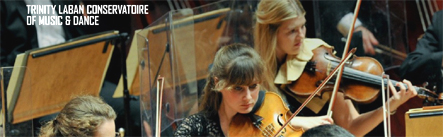

My teaching of the double bass is underpinned by a fundamental aesthetic that encompasses a uniquely identifiable concept of sound, virtuosic instrumental command, and an intellectual foundation rooted in eternal curiosity.
Imparting the knowledge I have been fortunate enough to acquire over the course of a lifetime is not only a privilege, but my responsibility. My advice to aspirant young virtuosi? Respect yourself, respect the music you’re entrusted with, respect the instrument you play, and resist the temptation to see life as a zero-sum game. Culture, creativity and artistic fulfilment ought never to be degraded into a competitive sport, but if there exists an element of competition in music, that competition has to be a personal one; how to become the best human being and artist one can possibly be?
Because all music is ultimately judged at the emotional level, successfully judging competitions requires a framework of objectivity, and I have to that end defined four basic criteria that guide me when my judgement or opinion is required, as was the case recently with the BBC Young Musician of the Year 2018:
1. Technical
2. Musical
3. Intellectual
4. Aesthetic.
It is only once all these factors have been meaningfully integrated, and added to the unique life experiences of each individual, that creativity can flourish.
1. Technical
2. Musical
3. Intellectual
4. Aesthetic.
It is only once all these factors have been meaningfully integrated, and added to the unique life experiences of each individual, that creativity can flourish.


The teaching method I have developed originated in my realisation that success as a teacher would require me to learn to explain complex concepts in the simplest manner possible, in order to enable a quicker route to mastery for my students. My system, which I believe to be absolutely fool-proof utilises a simple 4-point plan about which I am currently in the process of writing a book, and an article for the Strad magazine.
My projects for the future come in various categories:
1. Conductor and Soloist/Director
The double bass and I continue to pursue a passionate relationship, but thanks to Sir Neville Marriner’s encouragement, I am now forging a career as a conductor, and also directing my own concerto performances from the double bass; a rewarding and inspiring challenge.
The double bass and I continue to pursue a passionate relationship, but thanks to Sir Neville Marriner’s encouragement, I am now forging a career as a conductor, and also directing my own concerto performances from the double bass; a rewarding and inspiring challenge.
2. Recordings
I have ten solo recordings on the Meridian Records label, and am after a short hiatus, ready to resume my recording project; near the top of an ever increasing to do list will be:
(a) The Twenty First Century British Double Bass
(b) The South African Double Bass
(c) Josep Cervera: The Catalan Virtuoso volume 2
(d) The Dragonetti Phenomenon
(e) Gian Carlo Menotti’s Concerto for double bass
(f) Franz Josef Keyper – The complete concertos for double bass and orchestra.
I have ten solo recordings on the Meridian Records label, and am after a short hiatus, ready to resume my recording project; near the top of an ever increasing to do list will be:
(a) The Twenty First Century British Double Bass
(b) The South African Double Bass
(c) Josep Cervera: The Catalan Virtuoso volume 2
(d) The Dragonetti Phenomenon
(e) Gian Carlo Menotti’s Concerto for double bass
(f) Franz Josef Keyper – The complete concertos for double bass and orchestra.
Franz Josef Keyper (1756-1815) the Danish double bass virtuoso composed seven concertos for double bass, none of which has received any exposure since he himself performed them.
Unlike other virtuosi at that time, who employed the use of Viennese tuning, Keyper played on an instrument tuned in fourths.
I have to date performed Concerto No. 2 and Concerto No.5, and it is my intention to perform, record and publish all his concertos for double bass.


3. Soloist and Chamber Musician
Relieved of the intensive schedule of orchestral tours I pursued over the last 30 years, I am now devoting myself much more energetically to the interests of the double bass as a solo instrument.
It is an honour to be the recipient of so much wonderful new music, and I will over the next three months be performing the world premiere performances of the Concerto for Double Bass by Paul Patterson, The Song of Bone on Stone for solo double bass by Robin Walker, and Isipho for double bass and piano by the South African composer Peter Klatzow. I will also visit India for the first time and direct a performance of Franz Keyper’s Concerto No.2 in G Major with the Bombay Chamber Orchestra.
My chamber ensemble «I Musicanti embodies the universally cherished ideal of total artistic freedom and unrestrained self-expression, and it aims to provide a home to creative and imaginative artists who share the ambition of realising this dream».


It now lies at the heart of my activities as a chamber musician, although I do of course appear as guest artist with many other distinguished artists and ensembles worldwide.
This year has been particularly busy one for Schubert’s Trout Quintet, and a performance that I am particularly looking forward to is with Benjamin Grosvenorat the SouthBank Centre on 29th May 2018.

 4. Author/Writer and Publisher
Inspired by the example of Japanese author Haruki Murakami, whose books What I Talk About When I Talk About Running and Absolutely on Music: Conversations with Seiji Ozawa made such a deep impression on me, I am now beginning to write about everything that I am passionate about: Music, the double bass, politics, running, and life in general. My publishing company I Musicanti Publishing is dedicated to making available all the compositions I have unearthed over the years, all my own transcriptions for double bass, some of the new music composed for me, and chamber music with double bass currently not in print
5. Running
I have been running marathons and ultra-marathons for the last few years and have set myself the goal of completing a 100-mile race before the end of 2018. If everything goes according to plan, I should become a Centurion in October when I am scheduled to run the Autumn 100.
I have been running marathons and ultra-marathons for the last few years and have set myself the goal of completing a 100-mile race before the end of 2018. If everything goes according to plan, I should become a Centurion in October when I am scheduled to run the Autumn 100.


5. Your favourite work by Mozart and your favourite work by J. Haydn.
I actually have two favourite works by Haydn; his Symphonies No. 1 in D and No. 104 in D London.
Both continue to feature significantly in my consciousness and affections, primarily because of the power of my first encounter with each.
Haydn’s London Symphony was the very first symphony I ever played, at the age of 16, with the University of Cape Town’s Symphony Orchestra conducted by the British cellist, composer and conductor Allan Stephenson. The rather regal first movement opening Adagio made as profound impression on me as did the jaunty Finale, but it was the musicologist Professor Günther Pulvermacher who made me aware of Haydn’s unique contribution to the development of the symphony, and his particular talent for turning mere fragments into a coherent whole.
From that auspicious beginning in 1978, Haydn’s 104th symphony would feature more regularly in my professional career than any other symphony, but I had to wait until the end of my orchestral career and the start of my journey as a conductor, to encounter Haydn’s Symphony No.1 for the first time.
In May 2017 I performed a concert with The Liverpool Mozart Orchestra in which I conducted Haydn’s Symphonies No.1 and No. 104, and also directed two concertos from the double bass: Franz Keyper’s Concerto No.2 in G major and Allan Stephenson’s Concerto for double bass (2005).

The quality and maturity of Haydn’s first symphony belies the youth of its composer, and it has become a firm favourite of mine.

When it comes to Mozart I find this question rather more difficult to answer, but I have to admit that first discovering his concert aria Per Questa Bella Mano K.612 for bass voice with obbligato double bass (written again for Pischelberger, who, once left Dittersdorf and reached Vienna, was now working with Schikaneder, the producer of The Magic Flute, at that time) was a particular joyful moment for me. To have a work for double bass by a composer of this stature is of course a privilege, the fiendish technical demands notwithstanding. The opening Adagio is exceptional poignant and tender, and the Allegro requires virtuosity and exuberance in equal measure, from both soloists.
Performances of Per questa bella mano K.612 remain relatively rare, but it is one of the required audition pieces for the position of principal double bass in the New York Philharmonic Orchestra.

6. Do you have in mind the name of some neglected composer of the 18th century you’d like to see re-evaluated?
Johann Nepomuk Hummel (1778 – 1837).
Hummel is probably best remembered as Konzertmeister to Prince Esterhazy at Eisenstadt, and for succeeding Haydn as Kapellmeister.
He was predominantly concert pianist though, and was taught by Mozart, Clementi, Albrechstberger, Haydn and Salieri at various junctures in his development. His influence on the compositions of Chopin and Schumann is undoubted, and the slow movement of his Quintet in E-flat minor Op.87 illuminates this connection especially well.
Hummel first came to my attention when I performed this very Quintet for piano, violin, viola, cello and double bass, that proved to be the inspiration for Schubert’s Trout Quintet. A composer who employed the double bass in his chamber music was naturally going to find favour with me, and I have over the years performed this Quintet and his Septets with piano and double bass on a fairly regularly basis.
Other than for his trumpet concerto in E-flat, none of his other compositions ever presented themselves throughout my career as an orchestral player, until The London Mozart Players recorded a number of his piano concertos and the concerto for violin and piano with Howard Shelley, as well as one of the solo violin concertos and the Potpourri for viola with James Ehnes.
Hummel’s output as a composer is vast, including 8 piano concertos, 10 piano sonatas, a piano quartet, 8 piano trios, concertos for mandolin, bassoon and trumpet, sacred music, ballet music, sets of variations and potpourris for various solo instruments, as well as compositions for guitar, an instrument for which he enjoyed a special passion, also thanks to his friendship with M. Giuliani.
He curiously never composed a symphony however, but did make particularly elegant arrangements of Beethoven’s symphonies, for piano, flute violin and cello, and these are on the agenda for performance and recording with my ensemble, I Musicanti.


7. Name a neglected piece of music of the 18th century you’d like to see performed in concert with more frequency.
Leopold Anton Koželuh (1747 – 1818) – Sinfonia Concertante for trumpet, piano, mandolin and double bass.
Koželuh’s outstanding reputation and success as a pianist, composer and teacher enabled him to decline the Archbishop of Salzburg’s offer to succeed Mozart as court organist and although his output is naturally dominated by the piano, this beautiful and elegant sinfonia concertante is significant for a number of reasons:
1. The combination of soloists must surely be unique in the history of music.
2. Koželuh’s challenging, idiomatic and sensitive writing for each of the soloists, as well as his skilful orchestral accompaniment, demonstrates a highly informed understanding of the capabilities and potential of each of the solo instruments.
3. It is characteristic of the sinfonia concertante form of the time, and unashamedly celebrates and fully utilises the skill of instrumentalists.
4. Pischelberger, for whom the double bass part was written features yet again, a testament to his stature as a soloist.
1. The combination of soloists must surely be unique in the history of music.
2. Koželuh’s challenging, idiomatic and sensitive writing for each of the soloists, as well as his skilful orchestral accompaniment, demonstrates a highly informed understanding of the capabilities and potential of each of the solo instruments.
3. It is characteristic of the sinfonia concertante form of the time, and unashamedly celebrates and fully utilises the skill of instrumentalists.
4. Pischelberger, for whom the double bass part was written features yet again, a testament to his stature as a soloist.
In his book About Conducting, Sir Henry Wood, founder of the BBC Proms, identifies a number of challenges that characterise the adverse working environment experienced by British orchestral musicians, especially rank and file string players, and the detrimental effect it can have upon their well-being.
But, he does go on to propose some solutions, not least the responsibility the conductor bears for unleashing the frustrated soloist within each of these demoralised, disaffected and alienated artists.
Musicians in the classical era, despite their subordination to the interests of the aristocracy, appear in my view to have enjoyed more favourable conditions for self-expression, and for fulfilling their artistic potential; I like to think that the popularity of the sinfonia concertante as a musical vehicle during this epoch supports my theory.

8. Have you read a particular book on Mozart Era you consider important for the comprehension of the music of this period?
Karl Ditters von Dittersdorf’s autobiography ought in my view to be compulsory reading.
[The three major versions of von Dittersdorf’s autobiographies are available through the MozartCircle OnLine Library (the original German one with an introduction by Karl Spazier and the most famous translations in English and in French:
MozartCircle Online Library
at von Dittersdorf WebPage, where you can find also a complete edition of theDittersdorfiana.
On MozartCircle you find also von Dittersdorf: His Life in Discs]
MozartCircle Online Library
at von Dittersdorf WebPage, where you can find also a complete edition of theDittersdorfiana.
On MozartCircle you find also von Dittersdorf: His Life in Discs]

It was whilst I was preparing for my recording of Dittersdorf’s compositions with The Academy of St Martin in the Fields that an ex-student of mine, Carl Hinde, alerted me to the existence of Dittersdorf’s autobiography.
Dittersdorf was not only an esteemed virtuoso who played string quartets with Haydn, Mozart and Vanhal, he was considered a pre-eminent musical authority and this colourful memoir was dictated to his son from his deathbed.
In it he provides us with an unparalleled insight into the artist’s relationship to the aristocratic society at that time. It also describes in some detail his own education and development as an artist and illuminates his personal journey as the servant to the Archbishop of Grosswardein and then in Johannesberg with the Prince-Bishop of Breslau, Philipp Gotthard von Schaffgotsch, both as Hofkomponist and then also as Amtshauptmann (Governor) of Freiwaldau (1773), officialy becoming also a Baron in that period, offices that let him, from time to time, reach Vienna and attend its soirées, salons, concerts and theatres and meet there with Mozart, Haydn, Paisiello and the others.
Most intriguingly, he regales us with tales of his own musical exploits, his relationship with innumerable eminent musicians and composers of significance at that time, and it is this aspect that I personally found most illuminating.
Dittersdorf was of course a virtuoso violinist (and violist) first and foremost, and in addition to 18 concertos for the violin, 5 for the viola and 3 concertos for two violins, his vast output includes the first mature cello concerto of the classical era, the only concerto for oboe d’Amore that I know of in the classical period, over a hundred symphonies, concertos for string quartet, piano, harpsichord, oboe and flute, sacred music, opera, oratorios and cantatas.
Dittersdorf was prolific by any standard, and with his compositions being so typical and representative of the classical era, these can surely teach us something. He speaks most fondly however of his Grand Concerto for eleven solo instruments (written in 1766 and including double bass) and what a pity that this manuscript should be lost. (see Dittersdorfiana p. 89: «… working at a Grand Concerto for eleven instruments, in the first allegro of which each soloist began with a passage for himself alone. Gradually three, five, seven, and finally nine parts were brought in. In the last solo all eleven took part… The twelfth alternativo was played by all eleven solo instruments, and, after a cadenza and a changeful capriccio, closed with a shake in sixths played by nine instruments…».)

9. Name a movie or a documentary that can improve the comprehension of the music of this period.
I have thought about this exhaustively and have come to the conclusion that there is no single movie or documentary that I can endorse, without reservation.
There are of course many enjoyable, but flawed films and documentaries, and perhaps this represents a gap in the market, yet to be filled by an enterprising creative artist?
10. Do you think there’s a special place to be visited that proved crucial to the evolution of the 18th century music?
Vienna, without a shadow of a doubt!
Vienna, the city of dreams remains one of the most vibrant cultural hotspots in the world. It boasts an illustrious musical lineage, and was during the classical era home to Haydn, Mozart, Beethoven and Schubert, who helped transform music into a respected cultural art form of greater social significance.
During the late 1970’s and early 1980’s whilst I was a still a student in South Africa, I established contact with Doblinger music shop (established in 1817) in Vienna, on account of their healthy catalogue of sheet music for the double bass, and spent all the money I earned from my party-time job selling refreshments in a cinema kiosk, buying as much music for double bass from them as possible.

Large brown envelopes of music arrived at my home in the township from Vienna on a regular basis and playing the music of these European composers enabled me to travel to Vienna and most of the rest of Europe, without having to leave my practice room.
When I did finally visit Vienna for the first time, Doblinger Music shop was naturally at the top of my itinerary, and walking into this quaint shop on Dorotheergasse, from which my collection of music originated, was like a dream come true.
Its dusty shelves and glass-fronted wooden music cabinets gave one the impression of stepping back in time. Even the shop assistants were dressed in a rather historic manner and handled the music and treated their customer with a degree of reverence that I imagine Beethoven and Schubert might have commanded.
I left the shop with yet more music and wandered through the streets of Vienna visiting places where the great composers had either lived, or had their music performed. I was surprised to come across plaques commemorating the lives of so many other composers, who have since been relegated to obscurity. Amongst these was Rodolphe Kreutzer to whom Beethoven dedicated his Violin Sonata No. 9 Op. 47, and who most violinists know of, because of his etudes for the violin.
My tour of Vienna also took in the Hochschule für Musik, other music conservatoires, and concert venues in the city. It was particularly impressive to see the density of musicians per head of population, and the swagger with which they went about their business, knowing that their work as artists is valued by the society of which they form an integral part.
Performing in the Musikverein over the last 25 years has been a particular joy, and I retain many happy memories of concerts there with Sir Neville Marriner and The Academy of St Martin in the Fields.


Thank you very much for having taken the time to answer our questions!
Thank you!

Copyright © 2018 MozartCircle. All rights reserved. MozartCircle exclusive property.
Iconography is in public domain or in fair use.
Iconography is in public domain or in fair use.


